
Navaja Folding Knife, Circa 1790
Navajas are traditional Spanish folding knives. They were popular with sailors of the Spanish Main who regularly carried them in their waistbands. Sixteen Navaja-style knives were recovered from the wrecks of the Nuestra Señora de Atocha and Santa Margarita. Both galleons sank in 1622. (1) Though best known for fighting and personal defense, Navajas were used for everything from cutting lines to peeling fruit to shaving. They were even used to perform surgery. (2) Over time a locking style blade with a backspring evolved. These knives were called Navaja de Muelles (Spring Knives). A metal pull ring to release the lock was added in the late 18th century. The ring was eventually discarded in favor of a lever.
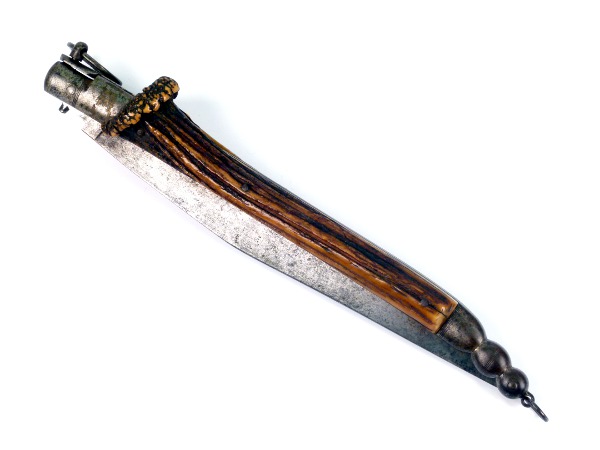
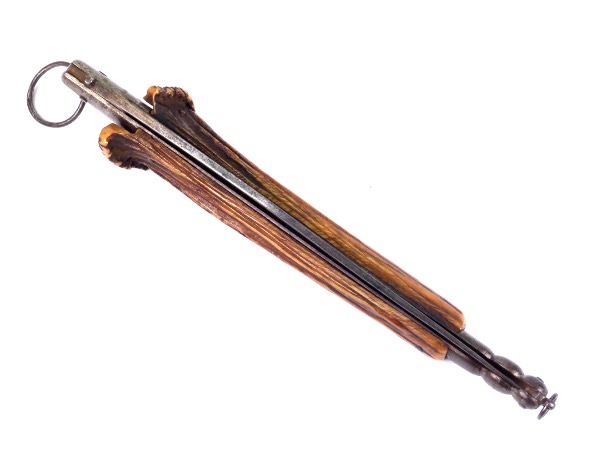
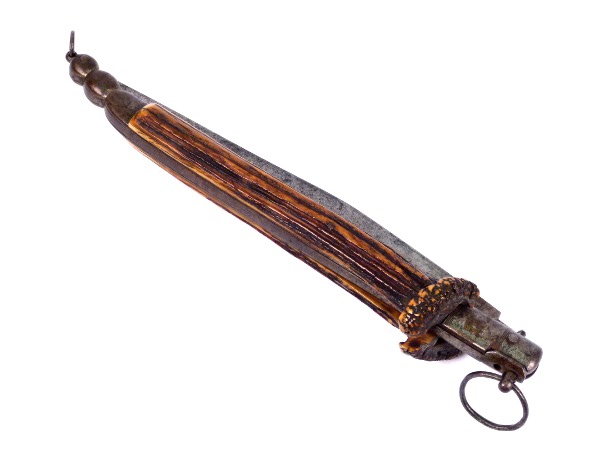
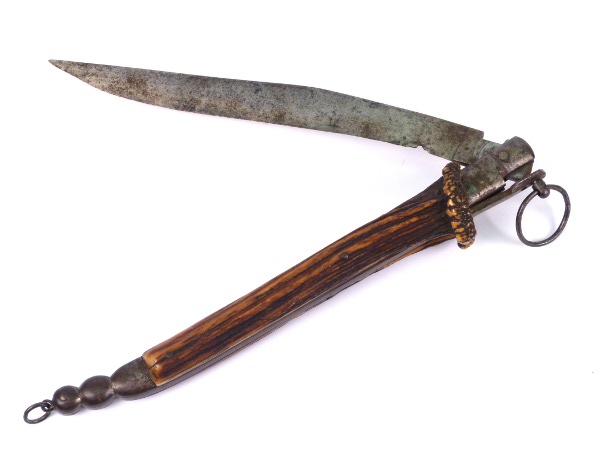
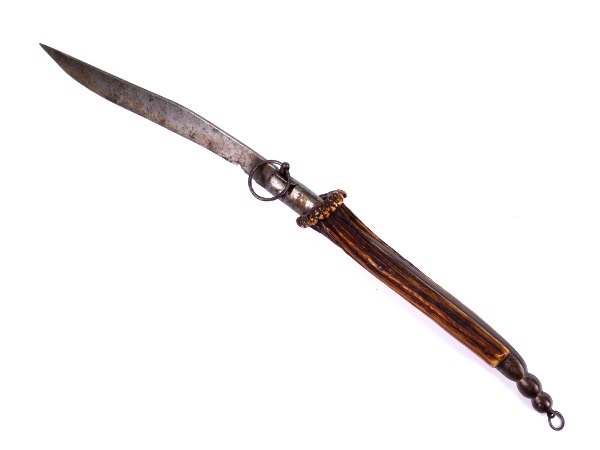
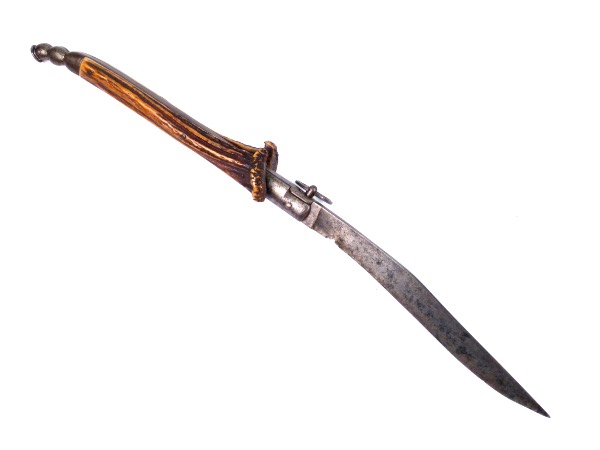
The Navaja shown below is 17 inches long when open and weighs 10 ounces. The 7 7/8 inch steel blade is nicked near where it folds into the stag horn handle. A spring under the blade locks it into place when open and a metal pull ring releases the lock. This style of Navaja is sometimes called a "tail rattler" (cola de crotalo), because the tip of the handle resembles a rattlesnake's tail. (3)
| Type: | Folding Knife |
| Style: | Navaja de Muelles |
| Country: | Spain |
| Overall Length: | 17 inches |
| Overall Width: | 1 3/8 inches |
| Handle Length: | 9 3/8 inches |
| Blade Length: | 7 7/8 inches |
| Weight: | 10 ounces |
| Handle: | Stag Horn |
References
- Navajas of the Galleons by Corey Malcom. Navajas of the Galleons
- The Surgeon by Jan Sanders van Hemessen, 1550. The Surgeon
- La Navaja Espanola Antigua, "cola de crotalo" (The Old Spanish Knife "tail rattler") by Martinez Del Peral Forton, Rafael 1980. La Navaja Espanola Antigua, "cola de crotalo"